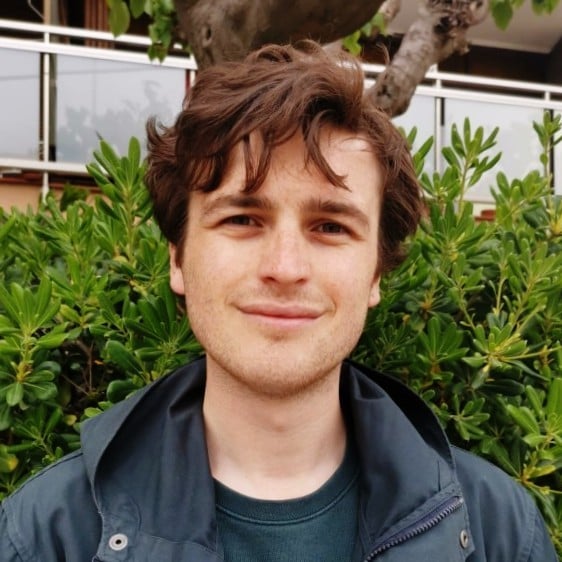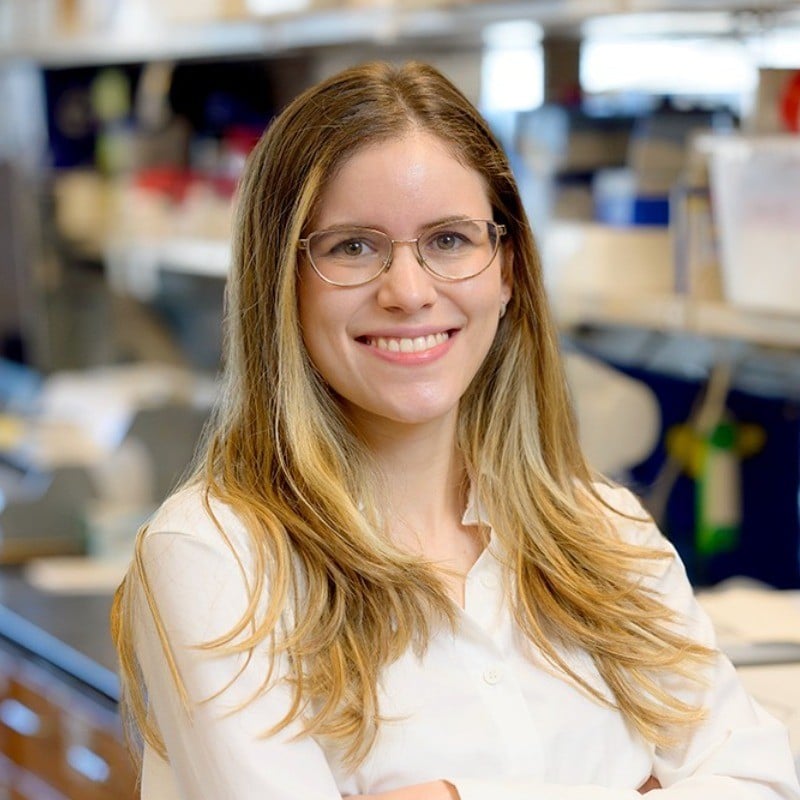

Pat Walters, PhD is Chief Scientist at OpenADMET, focusing on open, reproducible ADMET modeling and the application of machine learning to small molecule drug discovery. Previously, he served as Chief Data Officer and Senior Vice President of Computation at Relay Therapeutics, where he led teams integrating computational chemistry and data science into structure-based drug design programs. Earlier, he was Principal Research Fellow at Vertex Pharmaceuticals, managing global teams in molecular modeling, cheminformatics, and bioinformatics for computational drug discovery. Dr. Walters holds a PhD in Organic Chemistry from the University of Arizona and a BS in Chemistry from the University of California, Santa Barbara. He is recognized for advancing data-driven approaches to predictive modeling and for promoting open collaboration in the computational chemistry community.
ExpansionRx–OpenADMET Blind Challenge: A New Benchmark for Predictive ADMET Modeling
Monday, October 27th, 2025 at 8 AM (PT) | 11 AM (ET) | 5 PM (CEST)
Reserve Your Webinar SeatOpenADMET, in collaboration with ExpansionRx and CDD Vault, announces the ExpansionRx–OpenADMET Blind Challenge, a new open benchmark for evaluating predictive ADMET models.
The challenge introduces a large, previously unavailable dataset donated by ExpansionRx to advance reproducible model evaluation and transparent benchmarking within the drug discovery community.
This webinar will introduce the challenge design, dataset composition, and participation process. Attendees will see how to access the dataset on Hugging Face and explore it interactively through CDD Vault Public, where the data has been structured for visualization and structure–activity relationship (SAR) analysis.
Key Discussion Topics
-
Scientific motivation and design of the ExpansionRx–OpenADMET Blind Challenge
-
Composition and endpoints of the ExpansionRx dataset
-
How to access, train, and submit models via the Hugging Face challenge space
-
How the dataset appears in CDD Vault Public to support visualization and benchmarking
-
Timelines, participation workflow, and opportunities for open collaboration
Who Should Attend
Researchers, computational chemists, and model developers working in drug discovery, cheminformatics, or ADMET prediction who are interested in open data, benchmarking, and reproducible modeling.
Jon Ainsley, PhD
Computational Chemist at ExpansionRx
Jon Ainsley, PhD is a Computational Chemist at ExpansionRx, specializing in the application of artificial intelligence and molecular modeling to drug discovery. His work focuses on developing predictive methods for ADMET properties and optimizing compound design through data-driven approaches. Dr. Ainsley contributes to ExpansionRx’s efforts to integrate machine learning with experimental data to enhance model interpretability and reproducibility across discovery programs. He holds a PhD in Computational Chemistry and has expertise in cheminformatics, quantitative structure–activity relationship (QSAR) modeling, and the development of scalable predictive workflows for pharmaceutical research.
Maria A. Castellanos, PhD
Research Scientist at Memorial Sloan Kettering Cancer Center
Maria A. Castellanos, PhD is a Research Scientist at Memorial Sloan Kettering Cancer Center, focusing on the application of machine learning and open-science software to antiviral drug discovery. Her work integrates quantum chemistry, molecular modeling, and data-driven approaches to accelerate structure-based design for cancer and pandemic-related therapeutics. Previously, she served as a Research Assistant at the Massachusetts Institute of Technology, where she developed computational methods to study electronic properties in molecular systems, and as a Software Research Fellow at the Molecular Sciences Software Institute. Dr. Castellanos earned her PhD in Theoretical Chemistry from the Massachusetts Institute of Technology and her BS in Chemistry with an emphasis in Biochemistry from Universidad Icesi. She is recognized for her contributions to open computational infrastructure for molecular modeling and machine learning-based drug discovery.