
October 1, 2026
Lilly TuneLab and CDD Vault
Aliza described TuneLab as an industry-wide network that allows participating organizations to contribute data to shared predictive models while keeping their underlying proprietary data private. The CDD Vault integration makes these models available within an environment where scientists already manage their research data, including TuneLab models for small-molecule ADMET properties and antibody properties such as aggregation and viscosity.
Approximately one year after TuneLab’s launch, Aliza shared that external partners had contributed more than 675,000 data points. Combined with Lilly data and subsequent updates, she said the training data available for the small-molecule model had grown by approximately 30%.
Aliza explained that TuneLab model cards provide information about training data, protocols, model architecture, and performance metrics and are updated as models change. She also discussed efforts to build independent test sets in new areas of chemical space to evaluate whether newer model versions can better generalize beyond existing training data.
If you’d like to learn more about Lilly TuneLab and CDD Vault, or discuss how these approaches could support your research workflows, we’d be happy to connect.
Looking Ahead: Lilly TuneLab + CDD Vault: Upcoming Webinar
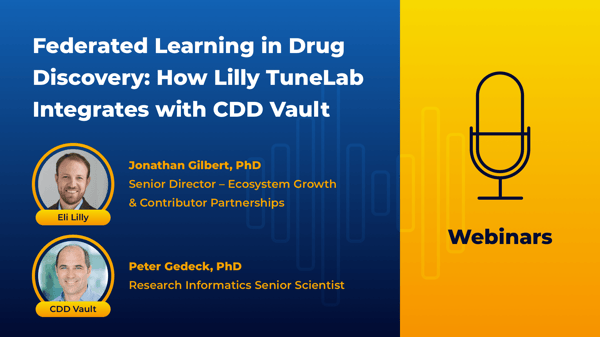
Join us on October 22 for Federated Learning in Drug Discovery: How Lilly TuneLab Integrates with CDD Vault, featuring Eli Lilly’s Jonathan Gilbert, PhD and CDD’s Peter Gedeck, PhD.
The webinar will take a closer look at federated learning, TuneLab’s predictive AI/ML models, including ChemLab and AbLab, and how these models integrate directly with CDD Vault workflows.


Barry Bunin, PhD
CEO & Board Director, Collaborative Drug Discovery
Barry A. Bunin, PhD is the CEO of Collaborative Drug Discovery. Dr. Bunin has overseen $100 million in business transactions over the last two decades. Prior to CDD, he was an Entrepreneur in Residence with Eli Lilly & Co. Dr. Bunin is on a patent for Kyprolis™ (Carfilzomib for Injection) — a selective proteasome inhibitor that received accelerated FDA approval for the treatment of patients with multiple myeloma that was widely viewed as the centerpiece of Amgen’s $10.4 Billion acquisition of Onyx Pharmaceuticals.
Dr. Bunin was the founding CEO, President, & CSO of Libraria (now Eidogen-Sertanty). At Libraria, he led a team that integrated exhaustive reaction capture (synthetic chemistry) with gene-family wide SAR capture (medicinal chemistry). On the scientific side, he co-authored “Chemoinformatics: Theory, Practice, and Products” (Springer-Verlag), a text that overviews modern chemoinformatics technologies, and “The Combinatorial Index” (Academic Press), a widely used text on high-throughput chemical synthesis.
In the lab, Dr. Bunin did medicinal synthetic chemistry developing patented new chemotypes for protease inhibition at Axys Pharmaceuticals (now Celera) and RGD mimics to inhibit GP-IIbIIIa at Genentech. Dr. Bunin received his B.A. from Columbia University and his PhD from UC Berkeley, where he synthesized and tested the initial 1,4-benzodiazepine libraries with Professor Jonathan Ellman.
Read Barry's expanded bio including publications with citations and other resources.
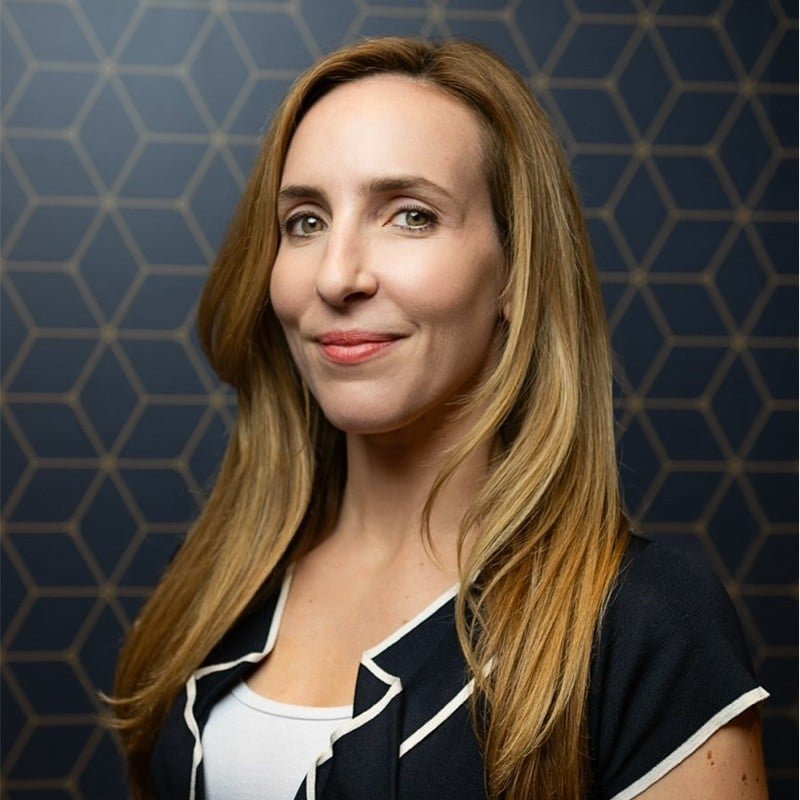
Aliza Apple, PhD
VP Catalyze360 AI/ML & Global Head of Lilly TuneLab at Eli Lilly
Aliza Apple serves as Vice President, Catalyze360 AI and is the Global Head of Lilly TuneLab at Eli Lilly and Company, where she leads the company’s global federated AI and data collaboration platform. She built TuneLab from inception to launch, creating a model for partnerships that unite pharma and biotech innovators around data governance, privacy, and model training. Before Lilly, she co-founded Santa Ana Bio and was a partner at McKinsey & Company. She also serves on the board of Biocom California.
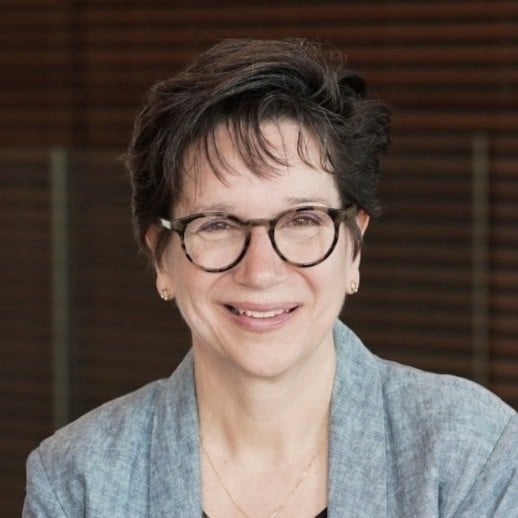
Mary Mader, PhD
President, MM Molecular Pharma Consulting, Former Research Fellow, Eli Lilly & Company
Dr. Mary Mader is an accomplished medicinal chemist with a career spanning pharmaceutical, biotech, and not-for-profit drug discovery.
Mary earned her PhD in Organic Chemistry from the University of Notre Dame and completed an NIH postdoctoral fellowship at the University of California, Berkeley.
During her time at Eli Lilly and Company and Relay Therapeutics, she contributed to the development of multiple clinical candidates in oncology, with a focus on kinase and epigenetic targets.
She has held key leadership roles in the scientific community, including chairing the Medicinal Chemistry Gordon Research Conference and the inaugural Gordon Research Seminar in Medicinal Chemistry.
She has served on the editorial board of Molecular Cancer Therapeutics and as working group chair of Chemistry in Cancer Research for the AACR. In addition, she currently chairs the Discovery Expert Scientific Advisory Committee (ESAC) of the Medicines for Malaria Venture and is an advisory board member for multiple biotech firms. Mary is recognized for her deep scientific insight and collaborative approach to advancing drug discovery.
.jpeg)
Michael Lajiness, MS
Independent Consultant, Former Research Advisor, Eli Lilly & Company
Mic Lajiness spent more than 40 years in pharmaceutical research at organizations including Upjohn, Pharmacia, and Eli Lilly. His work focused on the development and application of novel methodologies to elucidate and leverage relationships between molecular structure and biological activity. In parallel, he contributed to the design and implementation of enterprise-scale informatics systems to support and accelerate drug discovery.
He co-developed two major proprietary informatics platforms: Cousin/Chemlink at Upjohn and Mobius at Eli Lilly. These systems became widely adopted across research organizations, enabling thousands of scientists to integrate, access, and analyze chemical structure data alongside internal and external drug discovery information. Their capabilities functionally were similar to modern platforms such as CDD Vault.
Currently, Mr. Lajiness is semi-retired and selectively consults on projects that benefit from his expertise in integrative informatics, computational methodologies, and data-driven approaches to drug discovery.
.jpeg)
James H. (“Jim”) Wikel, MS
Chief Chemistry Officer, Apex Therapeutics, Former Head of Computational Chemistry & Structural Biology, Eli Lilly & Company
James H. (“Jim”) Wikel is a medicinal and computational chemist whose career has spanned pharmaceutical research, drug discovery, predictive modeling, and scientific leadership. He is best known for his long tenure at Eli Lilly and Company, where he worked from 1971 to 2004 as both a research scientist and research manager.
During his career at Lilly, Wikel held several scientific and leadership roles, including Senior Research Scientist, Head of Structural and Computational Sciences, and leader within Discovery Chemistry Research & Technologies. His work helped advance the use of computational methods and predictive modeling in medicinal chemistry, supporting the design and development of new therapeutic compounds.
Wikel contributed to research in medicinal chemistry, computational chemistry, and drug discovery, publishing more than 40 peer-reviewed scientific papers and being named on more than 75 U.S. patents. His publications and patents include work connected to compounds that advanced into clinical development, including antiviral agents Enviroxime and Enviradene, immunosuppressant small molecule Frentizole, and oncology drug Tasisulam, as well as contributions to the agricultural fungicide BEAM. His publications in computational chemistry include pioneering efforts in QSAR modeling, neural networks, machine learning, genetic algorithms, and natural-language interfaces for chemists.
He earned both a Bachelor of Science in Chemistry and a Master of Science in Organic Chemistry from Marshall University. After his career at Lilly, Wikel continued to contribute to scientific innovation and biotechnology leadership, serving as Chief Technology Officer at Coalesix, and founder of Pisces Therapeutics. In 2005 Wikel joined Apexian Therapeutics/Apex Therapeutics where he is currently Head of Research and Development. He contributed to early work on APX3330, which is now in Phase III trials for diabetic retinopathy. He also serves as a research advisor with the Indiana University Melvin and Bren Simon Comprehensive Cancer Center. He is a member of the Scientific Advisory Board of CDD.
Across his career, Wikel has been recognized for combining deep chemical expertise with computational approaches to support drug discovery and therapeutic development.